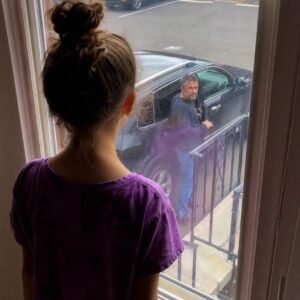
Denise parked her silver car across our driveway twenty two mornings in a row. She had her own driveway and two legal spaces outside her house, but her car completely blocked ours. The first time I knocked, she apologized. By the fourth time, I began photographing it with timestamps.
The worst morning left my boys sitting in the car for twenty two minutes. Ben was eight, Oliver was six, and both had already seen their names placed on the classroom late chart. We finally walked to school. I arrived at work an hour late and had an uncomfortable conversation with my manager.
That afternoon, I asked Denise properly to stop because her behavior was affecting my children and my job. She rolled her eyes, said I would survive, and closed the door.
I spent the evening reading the local rules twice. Then I set an alarm for half past five, photographed the car again, and contacted parking enforcement and the approved recovery contractor. I wanted a lesson, not a crime. By six eighteen, a truck had arrived.
Denise came running outside in slippers as the operator prepared her car. An enforcement officer asked for identification and whether she had previously been warned. Denise denied it, so I showed the twenty two photographs. When she complained about the penalty, I repeated her own words. She would survive.
She admitted her driveway was awkward to reverse into. That small inconvenience had caused three late marks, threatened my job, and made a six year old wonder whether his teacher thought he was naughty. Denise moved the car before it was removed, but the penalty and formal record remained.
For a week, our driveway stayed clear. Then the following Monday, the silver car appeared across it again. My husband Mark stared in disbelief. I took one photograph and called enforcement immediately. A second penalty followed.
Denise’s husband Paul came over that evening and apologized. He knew she had been blocking us but had not understood how often. He explained that Denise treated backing down as losing control, a habit formed during a difficult childhood. I felt sympathy, but reminded him that my children, job, and driveway were not responsible for her past.
Paul arranged to widen their driveway and told Denise to park legally until the work was finished. He also revealed that the problem had become a point of pride after I first complained. She had continued partly because she refused to let another person tell her what to do.
Denise never blocked us again. For months, she barely acknowledged me, which was fine. I did not need friendship. I needed access to my home.
Then one rainy morning, she approached with a letter from a school where she had begun working as an office administrator. During her first week, a mother arrived in tears because her daughter had received six late marks caused by an unreliable school bus. Denise’s first thought had been that the mother should solve the problem. Then she remembered my boys.
The school checked the records and removed the child’s late marks. Denise finally understood what it felt like when consequences fell on children for circumstances they could not control. She admitted she should have listened the first time, acknowledged she had been rude and petty, and apologized.
We did not become close friends, but I accepted the apology. Their widened driveway is now enormous, and Mark still jokes about Operation Silver Corsa. I do not regret waking before sunrise. I had asked politely again and again. Denise only listened when the consequence arrived before breakfast and could no longer be dismissed with an eye roll.