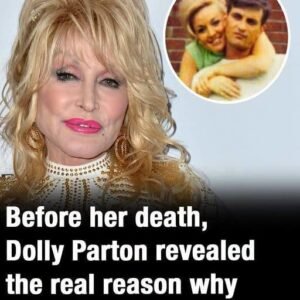
Ricky Schroder’s tribute to Dolly Parton began with gratitude. The actor remembered playing her father in the television movie Dolly Partons Coat of Many Colors and thanked her for choosing him as her “Movie Daddy.” Then he added that he had disagreed with her support for transgender people and COVID vaccines before saying he loved her anyway. That sentence changed the entire conversation.
Critics called the wording unnecessary, insensitive and poorly timed. Parton had just died, and fans expected a memorial focused on her life. To them, “loved her anyway” made her beliefs sound like a flaw Schroder had generously forgiven. They questioned why a political disagreement needed to occupy space in a farewell.
Defenders interpreted the post differently. They said affection does not require ideological agreement and argued that Parton herself had built relationships across political and cultural divides. From that perspective, Schroder was describing durable friendship rather than condemning her.
The reaction was intensified by Parton’s long association with acceptance. She publicly welcomed LGBTQ+ fans and spoke about judging people by character rather than private life. Her faith was visible, but she resisted using it as a weapon. Fans from very different communities saw her as someone who could share a room without demanding conformity.
Brandi Carlile’s tribute provided a contrast. Carlile emphasized that she had loved Parton before meeting her partly because Dolly accepted gay people when a star of her stature could easily have avoided the subject. She remembered generosity, wit and a willingness to speak when compassion could help.
Thousands of other tributes focused on music, philanthropy and personal kindness. Country artists remembered professional guidance. Political figures cited the Imagination Library and support for medical research. Friends described handwritten messages and the feeling that Parton made each person important.
Against that backdrop, Schroder’s qualification stood out. Public grief magnifies word choice because a tribute tells audiences what the writer considers essential. A person may hold many disagreements, but mentioning one in the first farewell can redirect attention from the dead to the speaker’s own position.
Social media then accelerated the conflict. Short excerpts traveled without the full post, and criticism became personal. It was possible to challenge Schroder’s phrasing without dehumanizing him, just as it was possible to defend his right to speak without dismissing why mourners felt hurt.
No single formula governs memorials. Some people write one sentence, others tell a long story and some remain silent. The practical lesson is that not every truth must be placed in every moment. A disagreement can be discussed later without making it part of the first public goodbye.
Parton’s legacy is larger than one controversial tribute. The debate nevertheless revealed how broadly she belonged to people who often disagreed with one another. Schroder meant to describe love surviving difference. Many fans heard him placing himself above the woman being mourned. The gap between intention and impact is why one sentence became the story.
A more graceful tribute could have preserved the same idea without naming the disputes. Schroder might have said that Parton treated people with different views generously and that he remained grateful for her trust. That would have centered her character rather than listing positions he believed required tolerance. Memorial language is difficult because grief is personal while social media is public. Writers speak to the dead, to families and to audiences at once. The controversy shows why editing matters even in an emotional moment. Before posting, it can help to ask whether a sentence reveals something essential about the person being honored or mainly about the writer. If the second answer is stronger, the thought may belong in a later conversation.