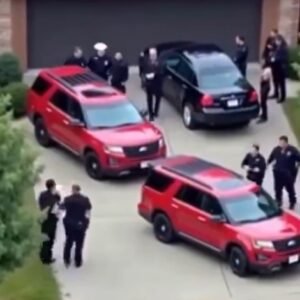
Any attack on a sitting U.S. president would typically trigger immediate statements from federal authorities, including the Secret Service, and extensive coverage from national news organizations. The absence of such confirmation is significant given the gravity of such an incident.
Continue Reading »Unverified claims about presidential safety spread rapidly across social media, particularly when accompanied by dramatic headlines, altered images or videos presented without reliable context. A video uploaded to social platforms is not, by itself, evidence that an event has occurred.
Users may repost old footage, recycle material from unrelated incidents or attach sensational descriptions to genuine videos showing events from another time or location. Trump was the target of an assassination attempt on July 13, 2024, during a campaign rally in Butler, Pennsylvania, when a gunman opened fire from a nearby rooftop, striking him in the ear.
Because that attack was extensively documented, old photographs and video from Butler can sometimes be misrepresented online as evidence of a new incident. Other security incidents involving Trump have also circulated online with misleading descriptions, including a 2024 incident involving gunfire near his Florida golf club that did not result in him being shot.
Current reporting instead focuses on the administration’s ongoing policy initiatives and international activities. Until federal authorities or multiple reputable news organizations confirm a reported attack, claims that Trump has been shot should be treated as unverified.
The responsible approach is to avoid sharing sensational posts as fact and wait for authoritative confirmation. At this time, there is no credible confirmation that President Donald Trump has been shot in Washington, D.C.
The distinction between a claim circulating online and a confirmed event is central to this story. Repetition can make a statement feel familiar, but familiarity is not evidence. If several posts repeat the same unsupported assertion, they may still represent only one rumor rather than several independent accounts of what happened.
A dramatic headline also leaves important questions unanswered. Readers need to know where the information originated, whether an identifiable witness or official statement supports it, and whether the details agree across reliable reports. Without that foundation, a short video or a striking caption cannot establish the event described in the headline.
The account supplied here emphasizes that the alleged shooting remains unconfirmed. That uncertainty should stay attached to the claim when it is discussed or shared. Removing it changes the meaning of the story and can turn a report about misinformation into another version of the misinformation itself.
The practical value of this article lies in that pause between seeing an alarming post and accepting its conclusion. A reader can recognize that the allegation is serious while still waiting for evidence. In this case, the available account offers a reason for caution, rather than a basis for presenting the rumor as an established incident.